Last updated November 21, 2026
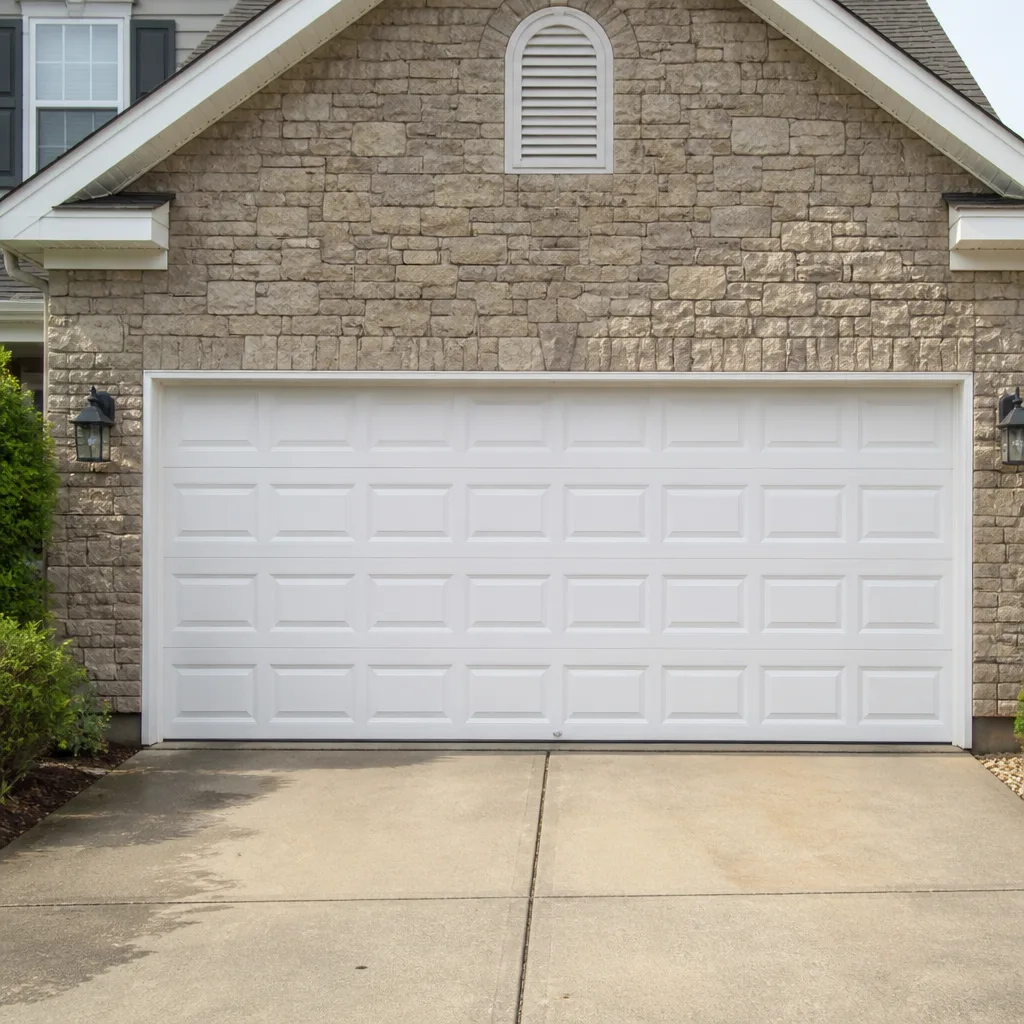 Raised-panel steel
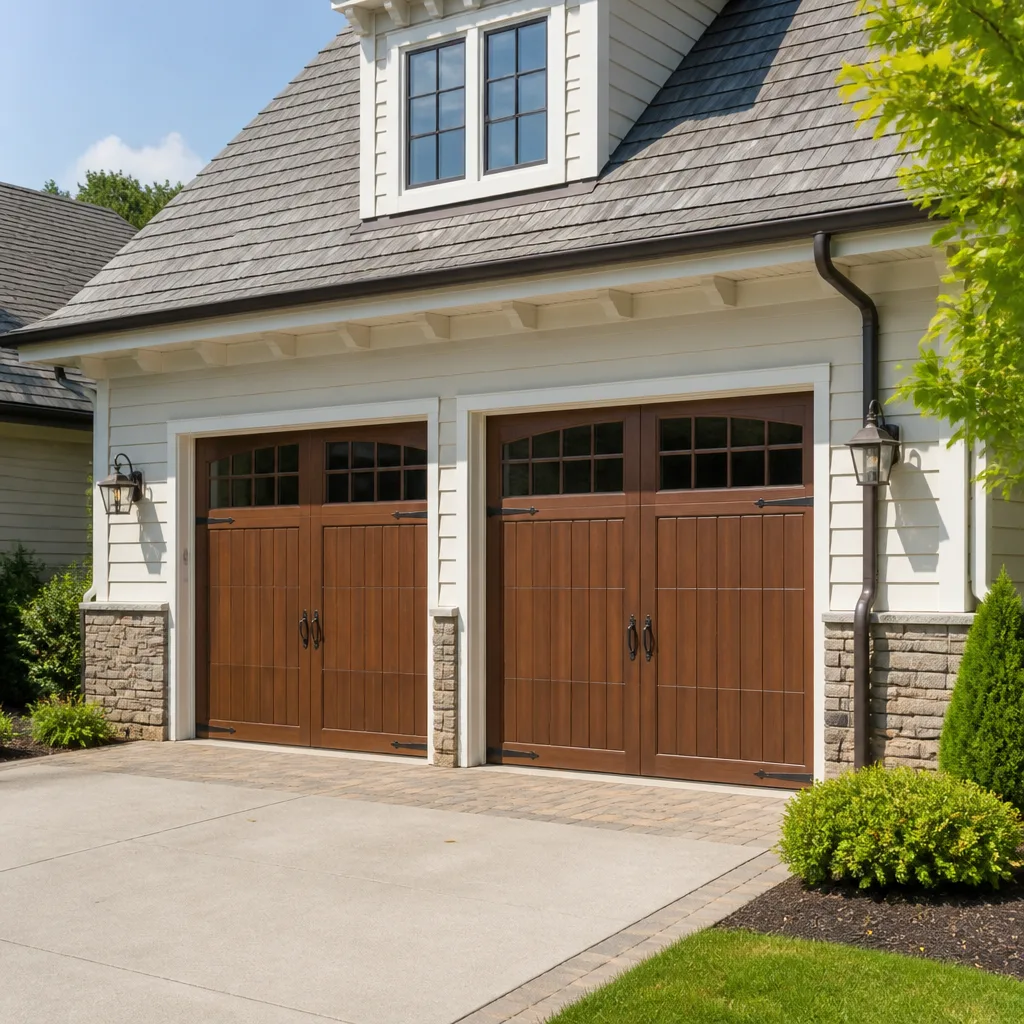 Carriage house
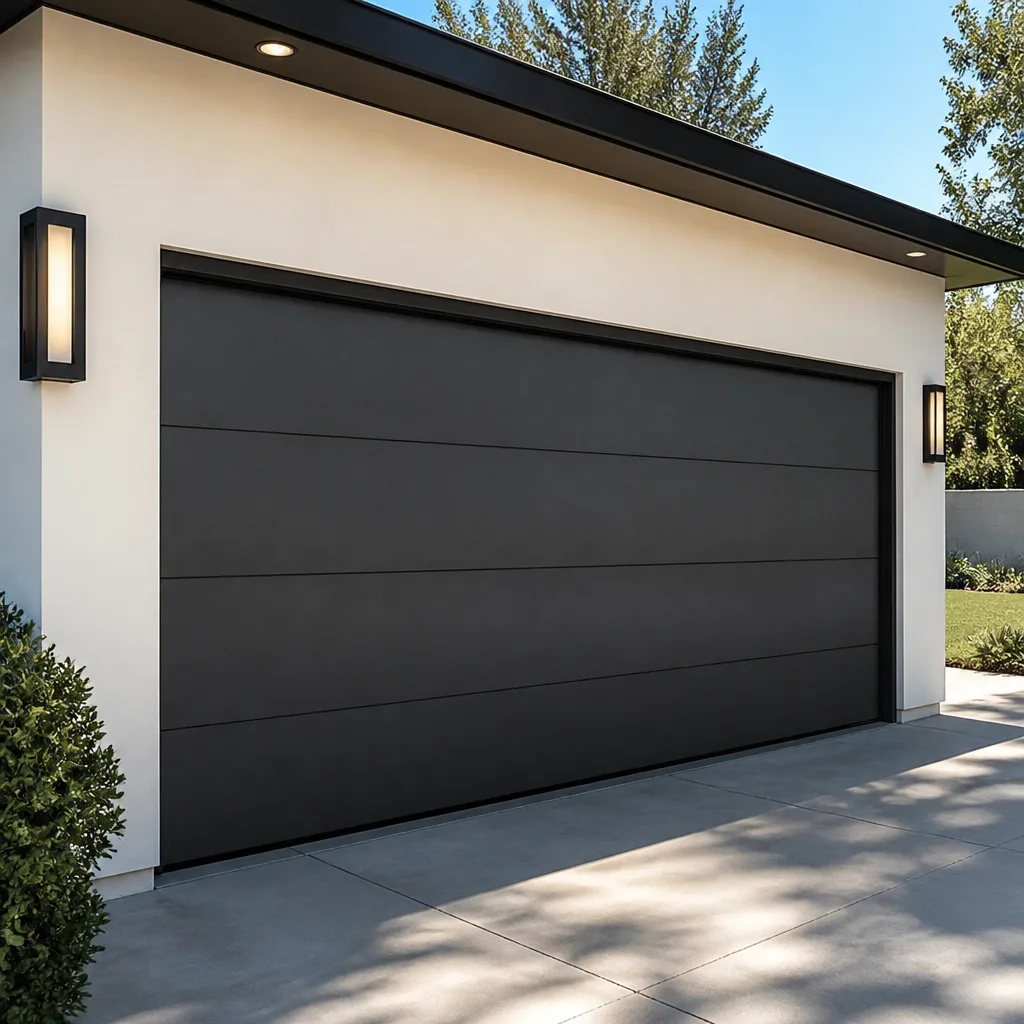 Modern flush
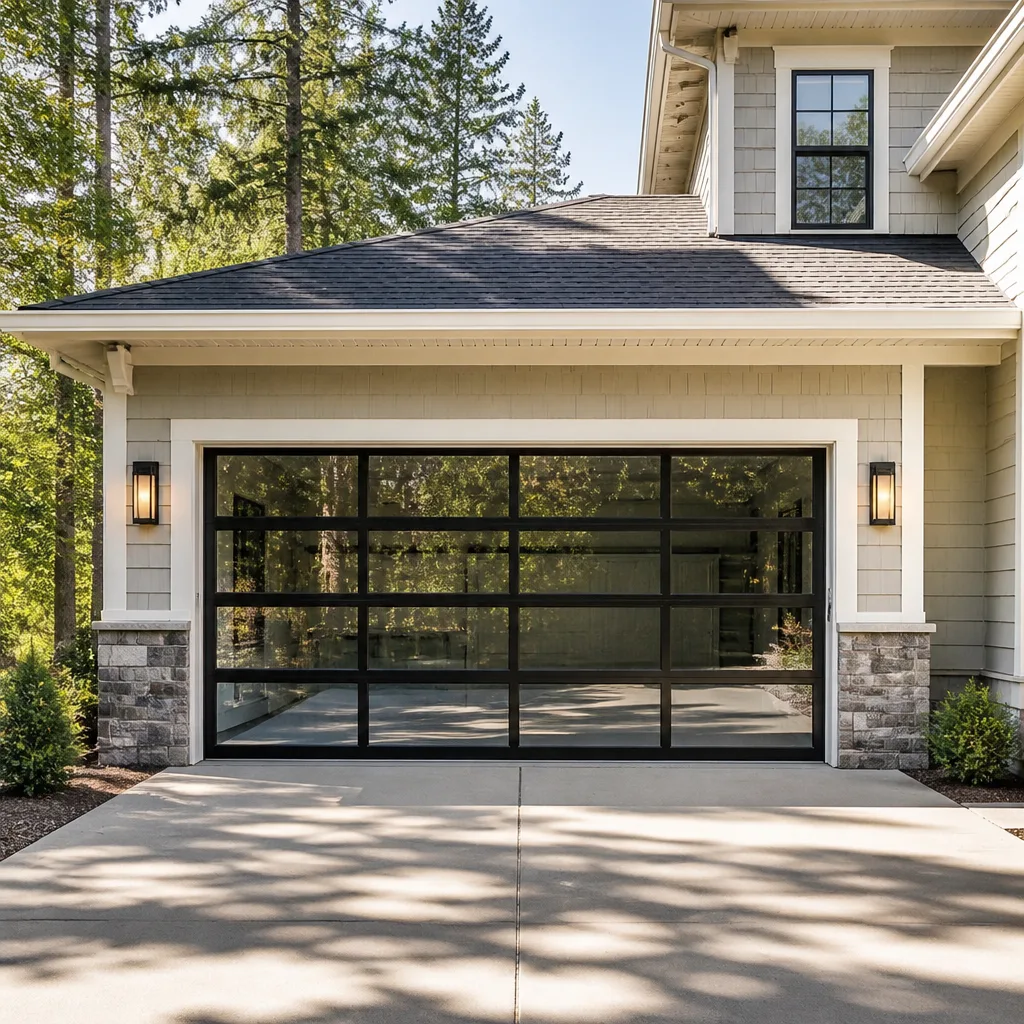 Full-view glass
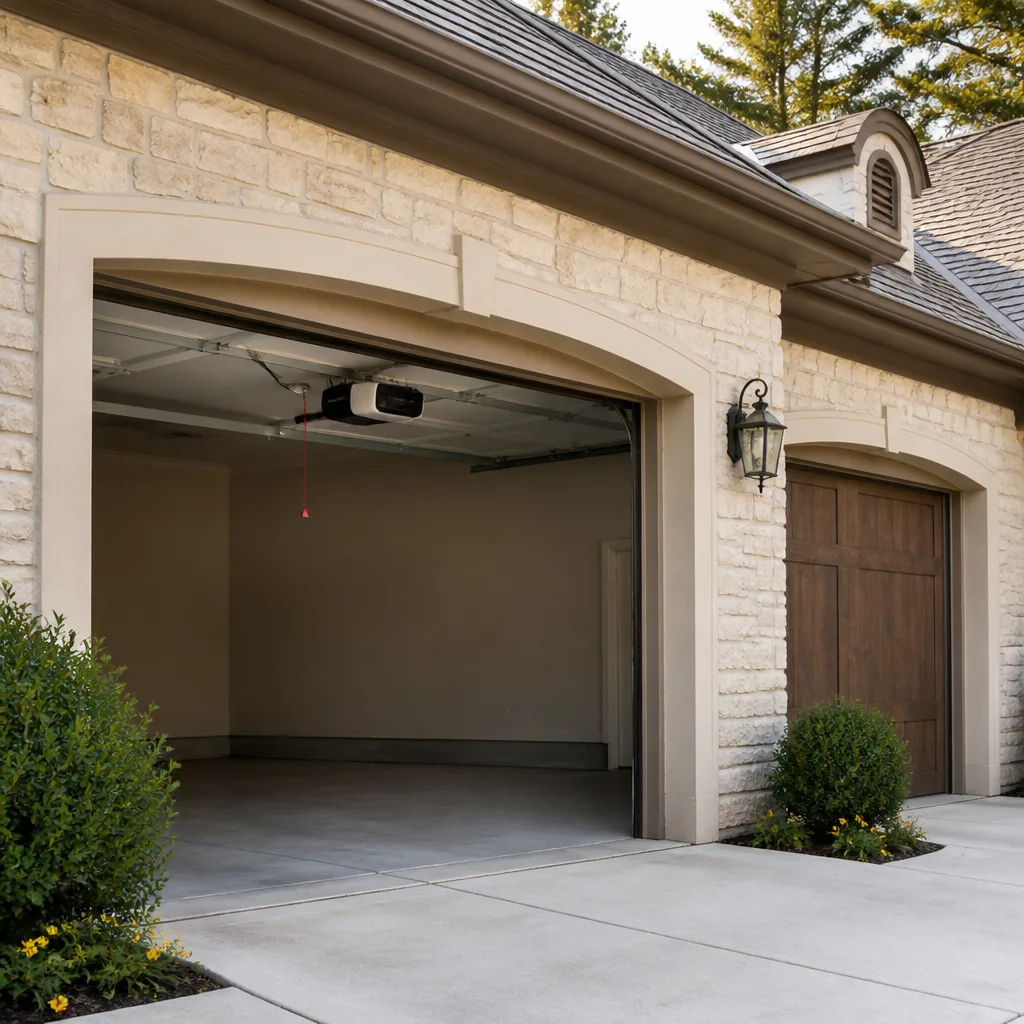 LiftMaster openers
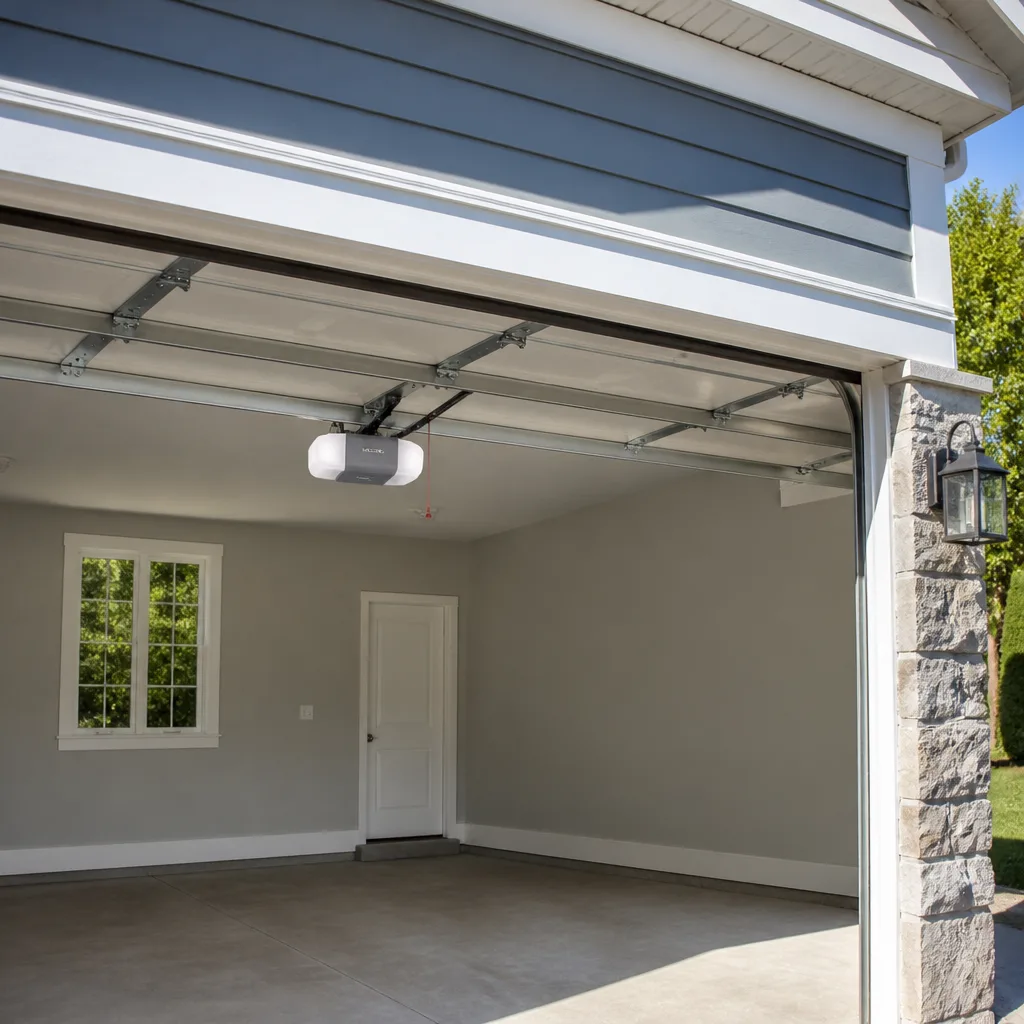 Chamberlain openers
Full 25-point door and opener safety check with every visit - springs, cables, rollers, tracks, and your LiftMaster or Chamberlain opener included
You get a price before we start. It does not change when the pro arrives.
Get your free estimateGarage Door Warning Signs: A Middletown Township Homeowner’s Reference Guide
A garage door that takes three seconds longer to open than it did six months ago isn’t “getting old.” It’s a torsion spring losing tension and telling you it has roughly 30 to 90 days before it snaps completely, most likely at 7am when you’re leaving for work. That’s the misconception this whole guide is built to break: garage doors give clear mechanical warnings before they fail. Homeowners are simply trained to ignore them. In Middletown Township, where most homes have an attached garage used as the everyday front door, that silence costs time and money. Below, we walk through what each sound, gap, and hesitation actually means – component by component.
Quick Answer
The most serious garage door warning signs are a door that opens unevenly, cables that hang slack or are visibly frayed, a loud bang from above followed by a door that won’t lift, and grinding or popping sounds during travel. Cosmetic wear (scrapes, worn paint, a slightly noisy roller) can usually wait; structural wear (springs, cables, brackets, track alignment) should be addressed within days, not months. When in doubt, describe the symptom by sound and location to a garage door specialist, and they can often narrow it down before anyone arrives.
Styles & brands we work with
- Raised-panel steel
- Carriage house
- Modern flush
- Full-view glass
- LiftMaster openers
- Chamberlain openers
Table of Contents
- Sound-Based Diagnosis: What Each Noise Is Telling You
- Visual Signs Most Homeowners Walk Past
- Opener Behavior Changes: Sensors, Motor, or Spring Load?
- Cosmetic Wear vs. Structural Wear: What Can Wait and What Can’t
- How Middletown Township Seasons Stress Your Door
- How to Describe a Warning Sign So Diagnosis Happens on the Phone
- When to Call a Professional
Sound-Based Diagnosis: What Each Noise Is Telling You
Sound is the earliest signal a garage door gives, and the most ignored. Your ears are picking up specific components under stress. Here’s what four of the most common sounds usually point to, based on what we see in the field:
- Grinding. Metal-on-metal friction, usually from dry or worn rollers, a bent track, or a torsion tube that needs lubrication at the end bearings. Grinding that appears suddenly often traces to a single roller that has seized.
- Squealing or high-pitched screech. Typically a dry spring or hinge. On torsion systems, a squealing spring can mean it’s on its way out. Squealing from the opener head itself is different – that’s usually the motor or gear assembly, not the door.
- Popping. A sharp pop during travel is often a cable jumping its drum or a spring catching on the torsion tube. If you hear one loud pop and then the door stops lifting, stop and call a specialist – that’s a spring failure, and it’s dangerous.
- Rattling. Loose hinge bolts, worn rollers, or a door panel that has lost a fastener. Rattling is usually the least urgent sound, but it worsens as vibration loosens more hardware.
One important note: if you hear the loud bang from above and the door won’t open, do not try to lift it manually and do not pull the red emergency cord to force it. A door with a broken spring is under extreme unbalanced load, and the cables can snap with enough force to injure someone standing nearby. Call a trained technician – that’s a job for a spring specialist, not a general handyman, and you can reach our team for garage door spring repair if that’s what it comes to.
Because we handle garage door repair as a dedicated trade and not a sideline, we’ve learned to translate these sounds quickly. A grinding door and a popping door may need the same technician’s visit, but they signal very different underlying failures.
Visual Signs Most Homeowners Walk Past
You can spot most impending failures with your eyes in about 60 seconds. Run through this checklist from inside the garage, with the door closed unless noted:
- Look for slack in the cables. Both cables on each side should be taut against the drum. A cable hanging with visible slack means it’s come off the drum or the spring has lost tension.
- Check for frayed strands. Cables are braided steel. If you see broken wires poking out at the drum or turnbuckle, the cable is on borrowed time.
- Stand inside and look at the gap under the door. A door that doesn’t sit flush against the floor, or that has a wider gap on one side than the other, is usually an out-of-balance door.
- Run your eye down the tracks. Tracks should be straight and evenly spaced. A bend, or a track that’s pulling away from its bracket, tells you the door is tracking unevenly.
- Look at the springs. On a torsion system (springs mounted above the door on a horizontal tube), look for a visible gap in the coil. On extension springs (springs running alongside the tracks), look for stretching or a safety cable that has come loose.
- Inspect for rust patterns. Surface rust that’s uniform is cosmetic. Rust concentrated at a single hinge, weld, or bracket point is where moisture is pooling and the metal is thinning – that’s usually where a failure starts.
In Middletown Township, where temperatures swing from humid summer days to freezing winter nights, the metal on your door expands and contracts with the seasons. That movement works loose fasteners and finds the weakest weld. When we’re diagnosing a door here, we pay close attention to those rust patterns, because they often predict where the first failure will occur.
Opener Behavior Changes: Sensors, Motor, or Spring Load?
When the opener starts acting up, the temptation is to blame the opener. But the opener is often reacting to a mechanical problem, not causing one. Here’s how to sort out what the behavior is telling you:
- Door reverses immediately or stops partway. Most often the safety sensors are misaligned or blocked. A small change in the sensor bracket can break the beam. This is the easiest fix – and available for our garage door opener repair service.
- Door hesitates at the start but then moves normally. That’s a load issue, not a motor issue. A spring that’s lost tension makes the opener work harder to lift the door. Ignoring this burns out the motor over time.
- Remote range drops off, or the opener only works when you’re close. Usually the remote battery, the wall-mounted antenna, or interference from nearby electronics. Not always a motor problem.
- Opener runs but the door doesn’t move. That’s a mechanical disconnect – a stripped gear in the opener, a broken spring, or a door that’s come off its track. Stop using it until someone looks at it.
- Motor runs loudly but the door is slow. Could be a failing capacitor in the opener or a door that’s out of balance. Worth diagnosing rather than guessing.
Here’s the reframe: a hesitating door is usually telling you the spring is losing tension, and the motor is just the messenger. We work on the brand already in your garage – LiftMaster, Chamberlain, Genie, Clopay, Amarr, Wayne Dalton, Craftsman, and Raynor – so when an opener is involved, we’re not learning your system on the clock.
Cosmetic Wear vs. Structural Wear: What Can Wait and What Can’t
Not every warning sign is urgent. The trick is knowing which ones are the door’s way of saying “you have days” and which are just surface wear. Here’s the split we explain to homeowners:
- Can wait (cosmetic): Scuffs and scrapes from a bike or car, faded paint, a noisy but functioning roller, a worn weather seal at the floor, uniform surface rust. These affect appearance and, at worst, a small amount of energy efficiency. You can plan them into a maintenance visit rather than scheduling a specialist now.
- Address within days (structural): A door that opens unevenly, a cable with visible slack or frayed strands, a bent track, a spring with a visible gap in the coil, a door that doesn’t sit flush at the floor, one loud pop then no lift. These are the door’s warning signs of an imminent failure, and putting them off tends to make the repair bigger.
One more distinction: “noisy” does not equal “failing.” A door that rattles but tracks cleanly is usually fine. A door that’s quiet but uneven is usually not. Listen for change, not for volume.
How Middletown Township Seasons Stress Your Door
Middletown Township gets all four seasons in a way some parts of the country don’t, and each one asks something different of your garage door.
Summer humidity swells wood doors, tightens seals, and drives rust along steel seams that see condensation. Fall is when homeowners first notice the door is stiffer than they remember – metal hardware is contracting, lubricant is thickening, and torsion springs are dealing with colder metal. Winter is the stress test: frozen hinges, doors that sit slightly harder on their seals, and springs working at reduced elasticity. Spring thaw brings expansion, and that’s when loose brackets and slightly misaligned tracks start to show. In our experience across Middletown Township, most “sudden” spring failures actually happen to springs that were already showing symptoms in December and January.
That seasonal cadence is a reason to check your door at the same time every year – when you change the clocks is as good a reminder as any. A five-minute visual pass in fall and spring catches 80% of the changes that matter. You don’t need to be mechanical to do it; you just need to know what to look at, which is what the rest of this guide covers.
How to Describe a Warning Sign So Diagnosis Happens on the Phone
A clear description on the phone can often narrow down the problem before anyone arrives at your driveway. That matters, because a technician who knows what to bring shows up prepared. Here’s how to describe what you’re seeing:
- Name the sound first. “It grinds,” “it squeals,” “I heard a pop,” “it rattles.” Each points to a different component.
- Say when it happens. At the start of travel, mid-travel, or at the close. The start of travel is usually a spring or cable load issue; mid-travel is usually a track or roller; the close is usually an alignment issue.
- Note the opener behavior. Does it run but not move the door? Does it reverse? Does it only work from the wall button but not the remote?
- Describe the door position. Is the door sitting even, or is one side higher than the other? Is there a gap under the door?
- Mention any visible damage. A bent track, a frayed cable, a spring with a gap – name it if you see it.
- Mention the brand if you know it. Clopay, Amarr, Wayne Dalton, Raynor, Craftsman, LiftMaster – any of these shortens the diagnosis, since we work on all of them.
That kind of call turns a vague “something’s wrong with my door” into a specific, routed job. It’s the difference between a technician learning your system on your driveway and showing up already knowing what to look for.
Common Mistakes to Avoid
- Ignoring the slow change. A door that takes three seconds longer than it did six months ago is warning you that a spring is losing tension. Waiting for a total failure usually means a bigger, more urgent repair.
- Pulling the red emergency cord on a broken door. If a spring has snapped, that cord disconnects the opener but leaves the door under extreme load. It can drop, and it’s a real danger to anyone standing nearby.
- Spraying the spring with household lubricant. A squealing torsion spring is not a lubrication problem, it’s a tension problem. Grease won’t fix lost tension, and this is one component where DIY steps are genuinely hazardous.
- Replacing the opener when the door is the problem. A hesitating door is often a spring load issue. Replacing the opener is a bigger expense that doesn’t fix the underlying cause. Diagnose first, replace only if needed.
- Assuming rust is only cosmetic. Uniform rust on older Middletown Township doors is surface wear. Concentrated rust at a hinge or bracket point is where the metal is thinning and failure is likely to start.
- Hiring a general handyman for spring or cable work. A garage door spring is under hundreds of pounds of tension. A general handyman who “does a bit of everything” is not the right call. This is a dedicated, dangerous job that needs a specialist.
- Waiting for “it to just break.” The average life of a torsion spring is measured in cycles, not years, and it will fail eventually. A warning sign is a chance to replace it on your schedule rather than at 7am when you’re leaving for work.
See the difference
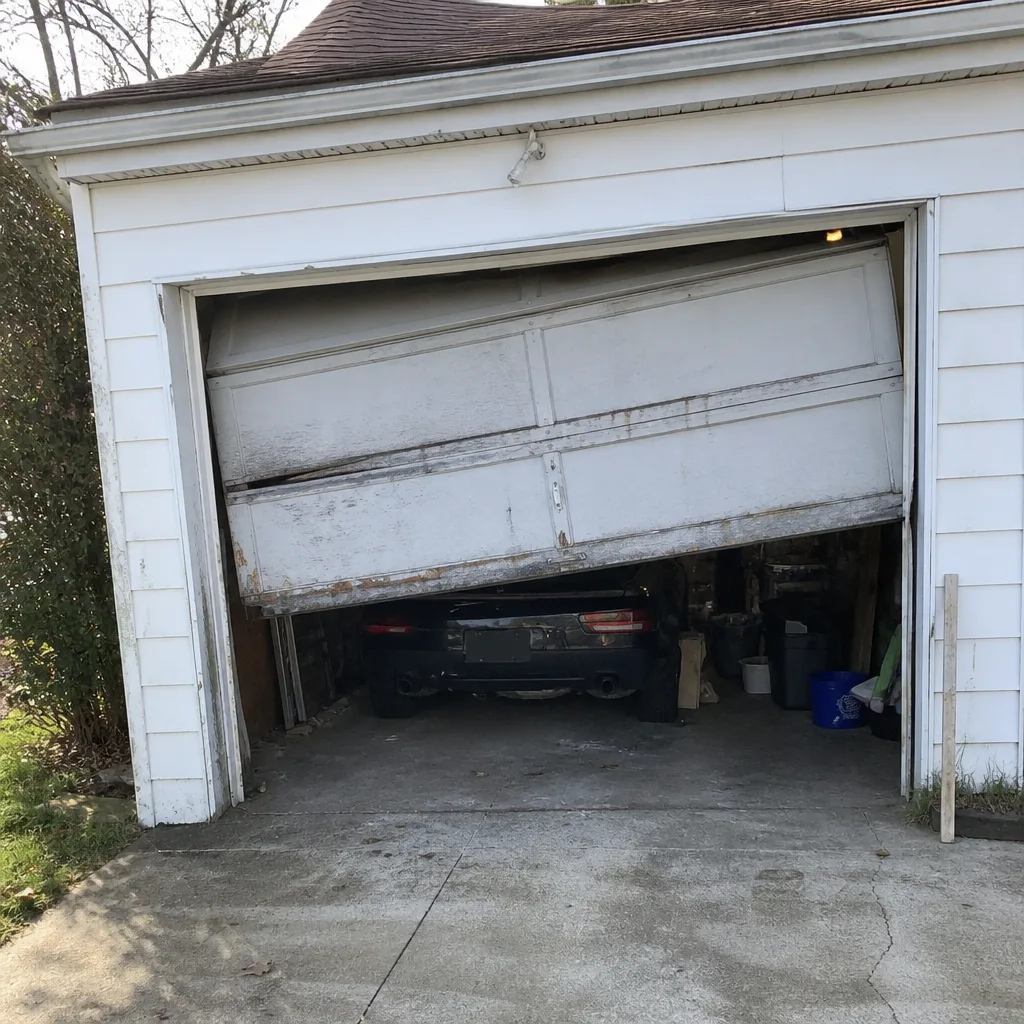 Before
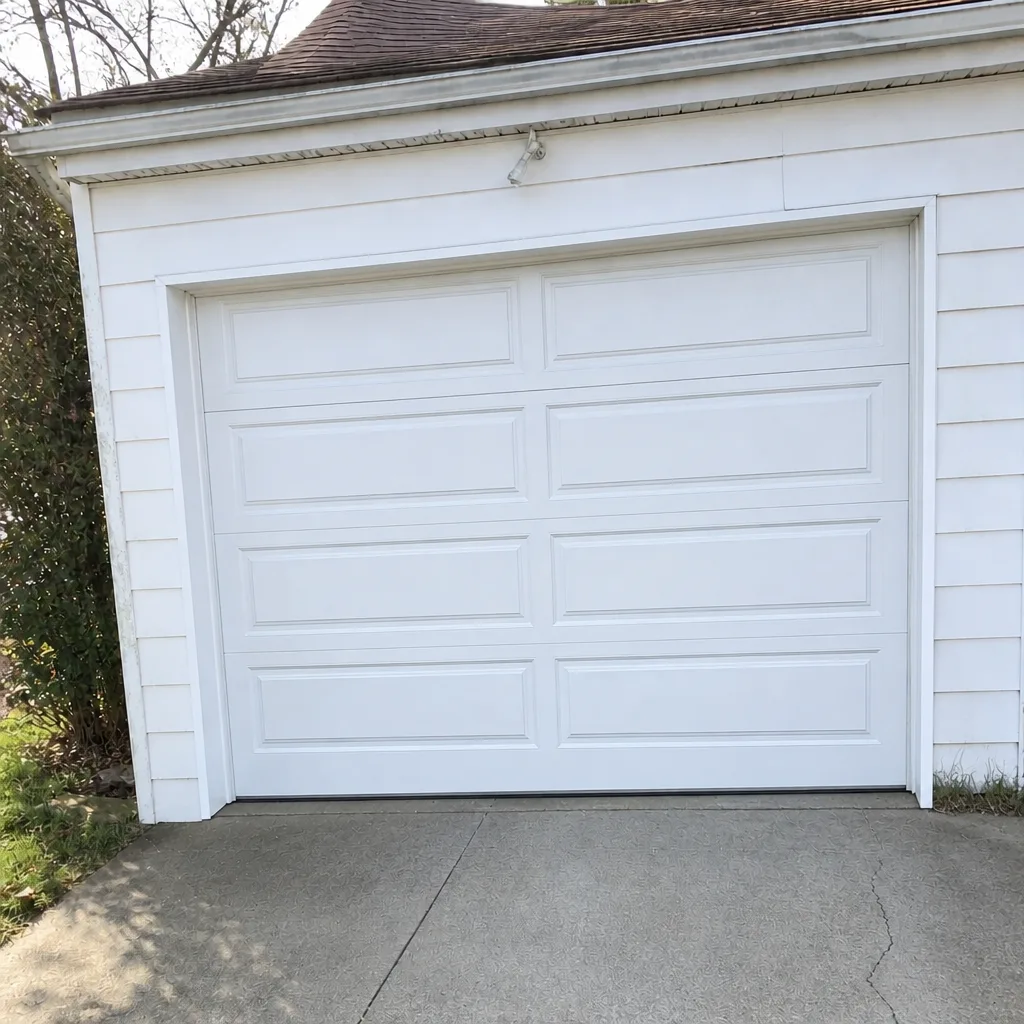 After
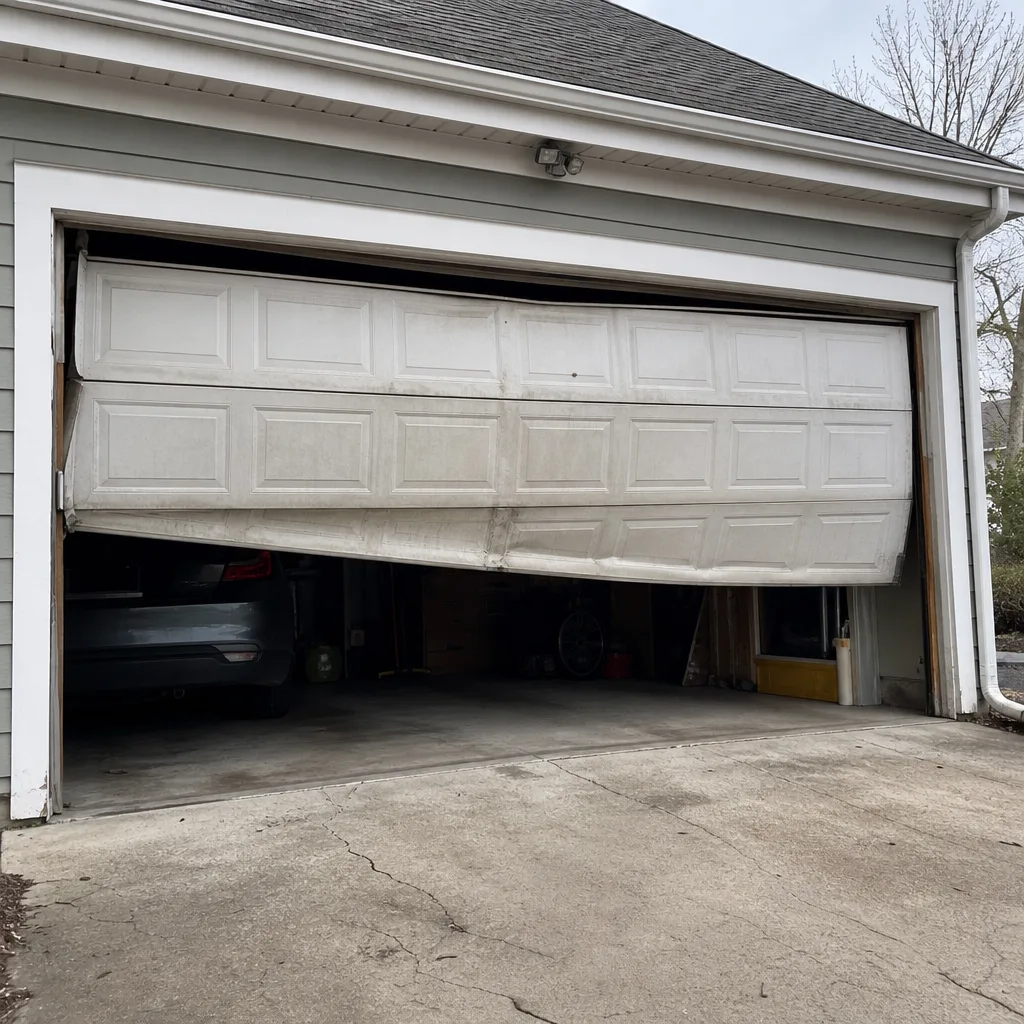 Before
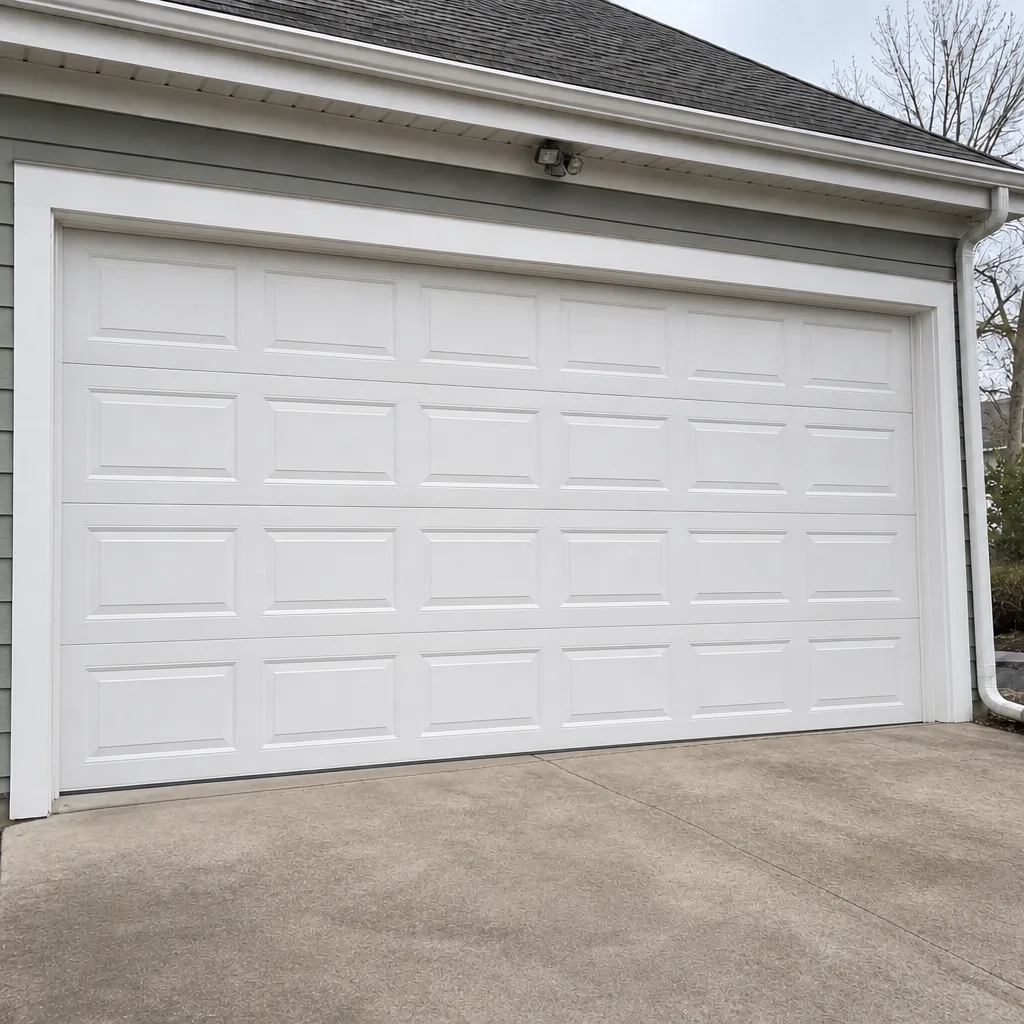 After
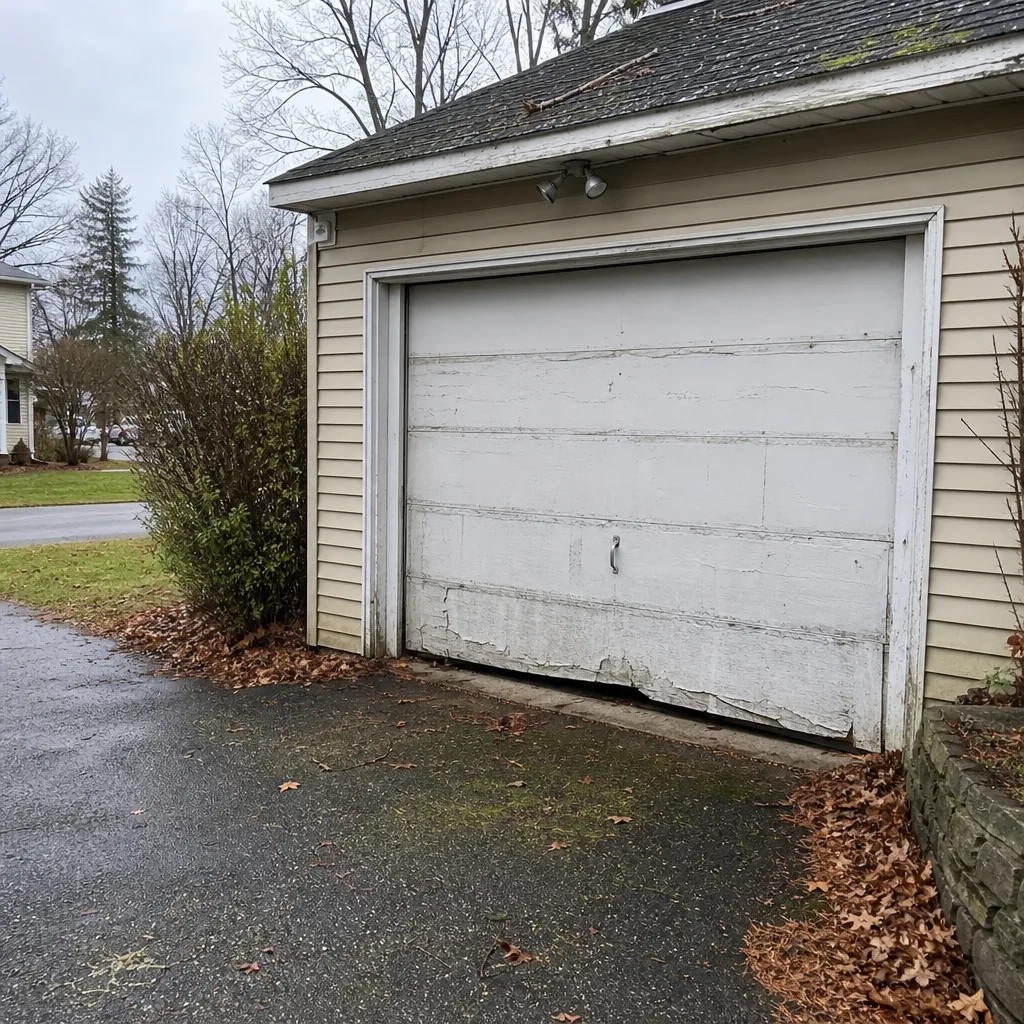 Before
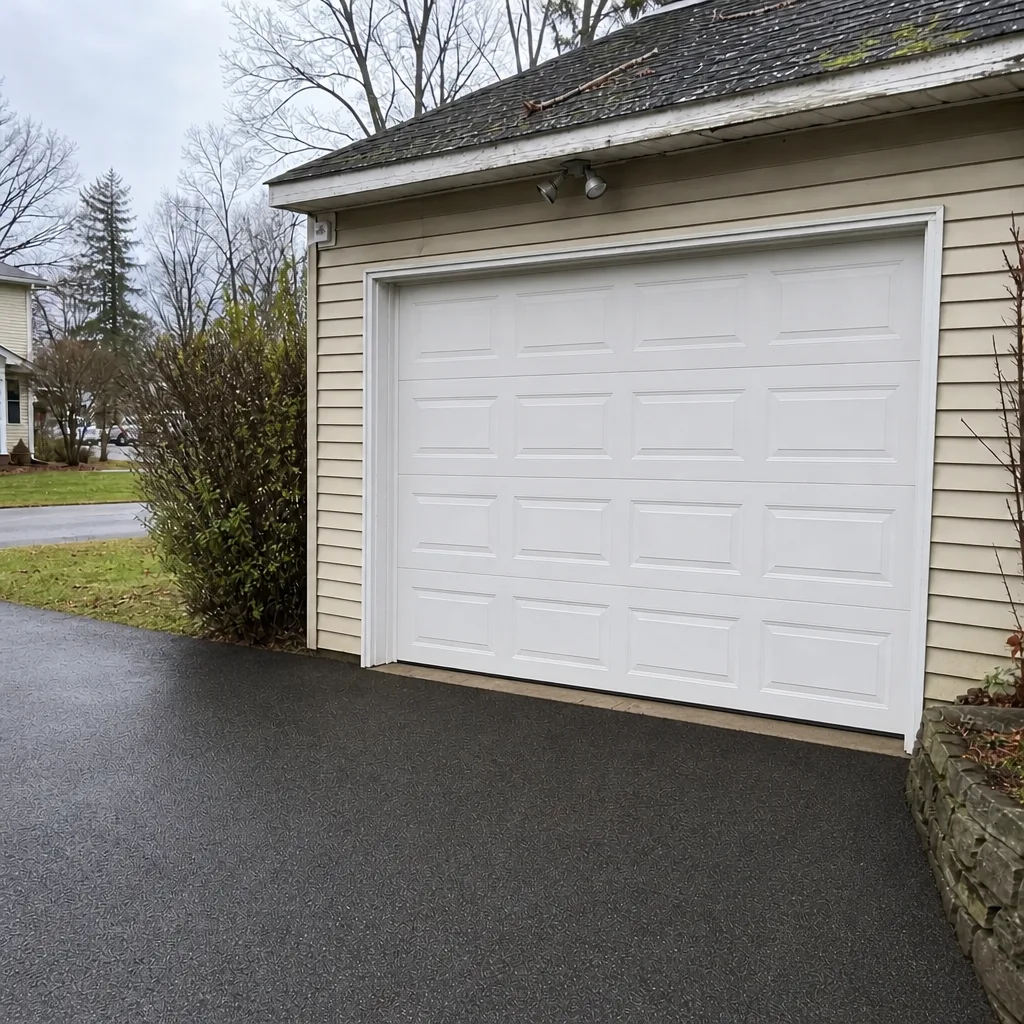 After
When to Call a Professional
Call a garage door specialist if you hear a loud pop followed by no lift, if you see a frayed or slack cable, if the door opens unevenly or doesn’t sit flush at the floor, if the opener runs but the door doesn’t move, or if a spring shows a visible gap in the coil. Those are the structural warning signs that don’t improve on their own. Cosmetic scuffs and surface rust can usually wait for a scheduled visit. Middletown Garage Door Repair Pros offers free estimates in Middletown Township – call (855) 425-4845. Our technicians have up to 13 years of experience, and because our whole focus is the door, we tend to diagnose the problem accurately on the first visit. If you’re not sure whether what you’re seeing is urgent, call and describe it – that’s the fastest path from symptom to a real answer.
Frequently Asked Questions
The most common warning signs are a door that opens unevenly, a visible gap or slack in the cables, grinding or popping during travel, an opener that hesitates at the start, and a spring with a visible gap in the coil. These are the sounds and sights that tell you a specific component is under stress. If you notice any of them, call (855) 425-4845 for a free estimate.
Not by itself. A door that rattles but tracks cleanly is usually fine, just loose hardware. A door that’s quiet but opens unevenly or hesitates at the start is usually the one with a real problem. Listen for change, not volume. Call (855) 425-4845 if a new noise has appeared.
Spring life is measured in cycles, not years, and most torsion springs are rated for a set number of cycles. Once a spring starts showing symptoms – slack cable, uneven door, or the hesitation at the start of travel – it typically has weeks to a few months, not years. Call (855) 425-4845 and we’ll walk you through what to look for.
No. An unevenly opening door is a structural warning sign and should be assessed within days, not months. Uneven travel usually means a cable, spring, or track alignment issue, and each of those gets worse with continued use. Call (855) 425-4845 for a free estimate and a written price.
No. We’re closed Saturday and open Sunday through Friday, 7am to 7pm. If your door fails on a Saturday, call (855) 425-4845 and we’ll schedule you for Sunday. If it’s an urgent security or access issue, we treat it as emergency garage door service and book the soonest slot within our hours.
We service equipment from LiftMaster, Chamberlain, Genie, Clopay, Amarr, Wayne Dalton, Craftsman, and Raynor. That means when a Middletown Garage Door Repair Pros technician arrives, they’re already familiar with the system in your garage. Call (855) 425-4845 for a free estimate on any brand in that list.
The Bottom Line
Garage doors don’t fail without warning. They grind, pop, hesitate, hang slack, and rust in patterns that predict where the failure will start. Learning to read those signals is how you turn an emergency into a scheduled repair – and in a Middletown Township winter, that difference matters. Sort cosmetic wear (scuffs, uniform rust, worn seals) from structural wear (uneven travel, slack cables, spring gaps, one loud pop and no lift). Describe what you’re hearing in terms of sound, timing, and position, and the diagnosis happens on the phone rather than on the clock. And when in doubt, call a specialist – the door is the one part of your house that’s under constant spring tension, and it deserves a dedicated trade, not a generalist.
If you want an exact diagnosis on your own door, call (855) 425-4845 for a free estimate. We’ll walk through the symptoms with you, give you a written price before any work starts, and make sure you know whether it’s a plan-ahead repair or a fix-it-now situation.
Written by the team at Middletown Garage Door Repair Pros.